Six Years On: Confronting the Wreckage of Ōtautahi and the Cycles We Must Break
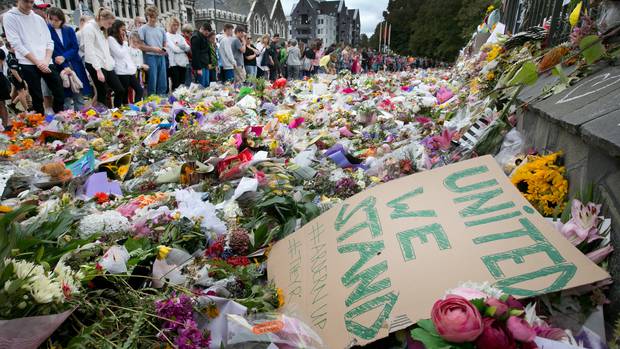
To answer that, we must ask: how do we understand time? How do we perceive the past? And more importantly, how do we reckon with it?
"Past is past," they say. But this is a convenient myth. We cannot simply reject the past, nor can we ignore how it shapes us. In astrophysics, we measure the distance of stars and galaxies in light years—the time it takes for light to travel from one object to another. The light we see from the sun, for example, is not the sun as it is now, but the sun as it was eight minutes ago. This gives us a critical insight into the way time functions: we never experience the present in its purest form; we are always seeing it as a delayed image, shaped by distance and time. What we think of as the present is merely the past arriving in a different form. So why, then, do we insist on turning away from our history?
Aotearoa, like many nations, has a collective habit of denying its past, of distancing itself from the violent and unjust legacy of colonization. And yet, just as light travels across space, so too does history continue to influence the present. Aotearoa refuses to confront this—stuck in a cyclical pattern of denial. We are caught in the wreckage of our own history, unable or unwilling to acknowledge it. But history does not passively fade away. It lingers, accumulating in layers, a constant presence that demands our attention.
Walter Benjamin’s vision of history, encapsulated in his Angel of History, captures this truth beautifully. In his famous 1942 essay, Benjamin writes:
"There is a painting by Klee called 'Angelus Novus.' It shows an angel looking as though he is about to move away from something he is fixedly contemplating. His eyes are staring, his mouth is open, his wings are spread. This is how one pictures the angel of history. His face is turned toward the past. Where we perceive a chain of events, he sees one single catastrophe which keeps piling wreckage upon wreckage and hurls it in front of his feet."
The Angel of History sees the wreckage of the past, not as a neat, linear progression of events, but as a chaotic pile, a mess of destruction. This image is not only about the angel’s view of history, but about our own. We, too, are faced with the wreckage of a violent past—colonization, racism, and injustice—that we continue to carry with us, refusing to reckon with it. The tragedy in Christchurch is not an isolated incident; it is the latest in a long line of violent outbursts stemming from deep-rooted prejudice, ignorance, and hate. These cycles of destruction do not stop; they accumulate, one upon another.
We must ask: How long will we allow this wreckage to pile up? How long will we refuse to confront it?
This refusal to acknowledge history—the refusal to break the cycle of colonization, oppression, and racism—has led to the tragedy we saw in Ōtautahi. The attack was not just the work of a lone terrorist; it was a product of centuries of unresolved tension and violent ignorance, the kind of ignorance rooted in a history of colonial violence and the exploitation of immigrant communities. This, too, is the wreckage Benjamin spoke of—our society still living with the consequences of past injustices.
It is easy to frame such tragedies as aberrations, as isolated moments of violence. But they are not. They are cyclical. They are the direct consequences of a society that refuses to confront the past and break the cycles of oppression and division. For too long, Aotearoa has failed to fully engage with the principles of Te Tiriti o Waitangi, the foundational document that binds this country together. These principles—partnership, protection, and participation—must not only apply to Māori, but to all people who now call Aotearoa home, including immigrants. The treaty is not a relic of the past but a living promise that remains unfulfilled. Until we actively work to uphold those promises, we will continue to see history repeat itself.
The real enemy is not Islam. It is ignorance, fear, and white supremacy—the destructive ideologies that breed division and hate. It is these ideologies that turn us into enemies of one another, that prevent us from recognizing our shared humanity. These ideologies are rooted in false narratives—narratives built on fear and misinformation that keep us trapped in the wreckage of history.
But breaking these cycles is not just about rejecting hate. It is about creating something new—a society where kindness is not rare, but the norm. It costs nothing to be kind, yet we hesitate, for fear of vulnerability. Why do we withhold it? Why do we allow the "us vs. them" mentality to fester? When we do so, we perpetuate the division that enables hatred to thrive. We must reject this mentality. We must acknowledge that we are all part of the same human family. Until we do, we will continue to live in the wreckage of history.
The terror attack on 15 March 2019 reminds us that we cannot afford to be complacent. We cannot afford to ignore the cycles of violence and oppression that have shaped our society. To honor the victims of that tragedy, we must do more than remember. We must actively work to dismantle the systems of inequality, to break the cycles of hate and ignorance. We must engage with the wreckage of our past, learn from it, and choose which cycles to break and which lessons to carry forward.
It is time to stop treating the past as something to be swept under the rug. We must face it, confront the wreckage, and take responsibility for the cycles we are perpetuating. Only then can we build a future that is truly just and compassionate—one in which kindness, respect, and unity replace fear, hatred, and division. This is the only way forward. And it begins today.


Comments
Post a Comment